
BitcoinWorld
Iranian Foreign Minister Firmly Rejects Any Dialogue with United States, Deepening Diplomatic Stalemate
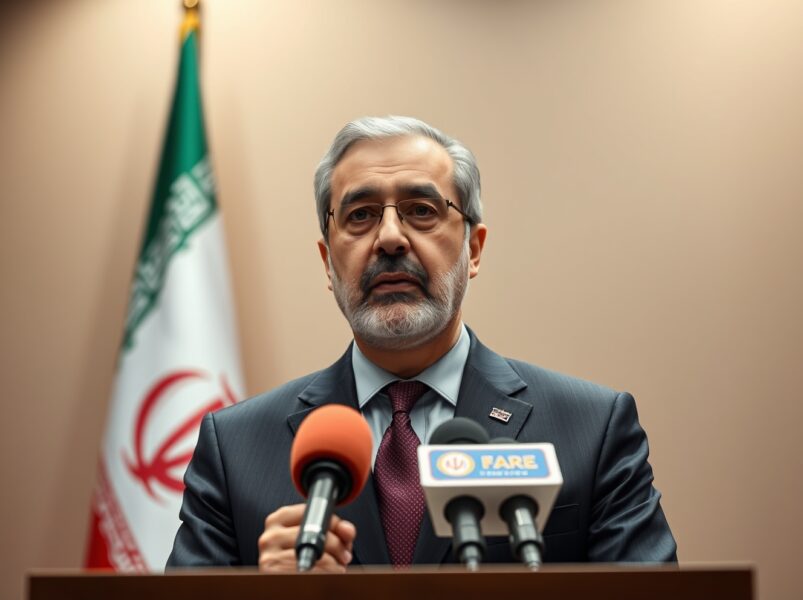
In a definitive move that underscores the profound and ongoing rift between the two nations, Iranian Foreign Minister Hossein Amir-Abdollahian has explicitly ruled out any diplomatic negotiations with the United States. This stark declaration, reported by Walter Bloomberg on March 21, 2025, from Tehran, Iran, immediately reverberated across global diplomatic circles, signaling a hardening of positions and casting doubt on near-term prospects for de-escalation in a volatile region. Consequently, analysts are now reassessing the potential for conflict and the stability of international energy markets.
Iranian Foreign Minister Delivers Firm Rejection of US Talks
The Iranian Foreign Minister’s statement was unequivocal. Furthermore, it represents the most direct and high-level rebuff of American overtures in recent months. This position is not an isolated incident but is deeply rooted in a history of mutual distrust. The 2015 Joint Comprehensive Plan of Action (JCPOA), commonly known as the Iran nuclear deal, initially offered a framework for cooperation. However, the U.S. withdrawal from the accord in 2018 under the Trump administration severely damaged bilateral relations. Subsequently, re-engagement efforts have repeatedly stalled.
Several key factors underpin Iran’s current stance. Primarily, ongoing U.S. sanctions continue to exert massive pressure on Iran’s economy. Additionally, perceived American support for regional adversaries remains a major point of contention. Moreover, internal political dynamics within Iran often favor a hardline approach against Washington. Therefore, the Foreign Minister’s announcement aligns with both strategic policy and domestic political calculus.
Historical Context and the Cycle of Diplomatic Deadlock
To understand the significance of this rejection, one must examine the cyclical nature of US-Iran relations. The relationship has oscillated between moments of tentative dialogue and prolonged periods of hostility for over four decades. For instance, the landmark JCPOA was a rare diplomatic breakthrough. Conversely, the assassination of General Qasem Soleimani in 2020 brought the countries to the brink of direct military conflict.
The table below outlines key recent events leading to the current impasse:
Year
Event
Impact on Diplomacy
2015
JCPOA signed
Opened channels for dialogue and cooperation.
2018
US withdraws from JCPOA
Catalyzed a return to “maximum pressure” and sanctions.
2021-2023
Indirect talks in Vienna
Attempted to revive the nuclear deal, ended without agreement.
2024
Escalation of regional proxy conflicts
Further eroded trust and created new preconditions for talks.
2025
Iranian FM’s statement
Formally closes the door on bilateral negotiations in the near term.
This historical pattern suggests that resolving the standoff requires more than simple willingness to talk. It necessitates a fundamental shift in the underlying conditions and mutual concessions that neither side has yet been willing to make.
Expert Analysis on Regional and Global Implications
Regional security experts immediately highlighted the wide-ranging consequences of this diplomatic closure. First, it increases the risk of miscalculation or unintended escalation in the Middle East. With formal channels effectively shut, incidents involving Iranian proxies or naval forces in the Gulf could spiral more quickly. Second, it complicates international efforts to address other shared concerns, such as maritime security or the stability of global oil shipments through critical chokepoints like the Strait of Hormuz.
From a global perspective, the statement impacts non-proliferation goals. A Iran uninterested in dialogue with the West may accelerate its nuclear program without the constraints of international monitoring. Consequently, this could trigger responses from other regional powers and potentially ignite a new arms race. The economic impacts are also significant, as uncertainty in the region often leads to volatility in global oil prices, affecting economies worldwide.
The Path Forward and Alternative Diplomatic Avenues
Despite the firm rejection of direct US talks, diplomacy is not entirely dead. Iran may pursue other avenues. For example, it could engage more deeply with European powers, Russia, or China to mediate or convey messages. Additionally, backchannel communications through third countries or international organizations like the United Nations may persist. However, these indirect methods lack the efficiency and clarity of direct dialogue.
The current US administration now faces limited options. It can maintain or intensify sanctions pressure, a strategy with diminishing returns. Alternatively, it could pursue confidence-building measures through intermediaries. A third option involves bolstering regional alliances to create a united front. Each path carries substantial risks and uncertain rewards, requiring careful strategic calculation.
Conclusion
The Iranian Foreign Minister’s definitive statement ruling out talks with the United States marks a critical juncture in a long-standing adversarial relationship. It reflects deep-seated grievances, a history of failed agreements, and current geopolitical realities. This position solidifies a diplomatic stalemate with immediate implications for Middle Eastern stability, global non-proliferation efforts, and international energy markets. While alternative diplomatic channels may exist, the closure of direct communication significantly raises the potential for regional instability and underscores the profound challenges in bridging the divide between Tehran and Washington.
FAQs
Q1: What exactly did the Iranian Foreign Minister say about talks with the US?The Foreign Minister, Hossein Amir-Abdollahian, explicitly stated there would be no negotiations or diplomatic talks with the United States, as reported by Walter Bloomberg. This was a clear and unambiguous rejection of bilateral engagement.
Q2: Why is Iran refusing to talk to the United States?Iran’s refusal is based on several factors: lingering anger over the US withdrawal from the 2015 nuclear deal, the continued crippling impact of US economic sanctions, a perception of American hostility, and domestic political pressures that favor a hardline stance against Washington.
Q3: Does this mean all diplomacy between Iran and the West has ended?Not necessarily. While direct US-Iran talks are rejected, Iran may still engage with European countries (E3), Russia, China, or through multilateral forums like the UN. However, these are less effective substitutes for direct communication between the primary adversaries.
Q4: What are the immediate risks of this diplomatic shutdown?The primary risks include an increased chance of military miscalculation in the Persian Gulf, accelerated advancement of Iran’s nuclear program without oversight, greater regional instability, and increased volatility in global oil prices.
Q5: Has the US government responded to this statement?As of the latest reports following the Foreign Minister’s announcement, the US State Department has not issued an official, detailed response. Analysts expect the administration to reiterate its openness to diplomacy while condemning Iran’s position, likely coupling this with a reaffirmation of sanctions and regional alliance building.
This post Iranian Foreign Minister Firmly Rejects Any Dialogue with United States, Deepening Diplomatic Stalemate first appeared on BitcoinWorld.
