
BitcoinWorld
Federal Reserve Rate Hike: Powell’s Critical Warning on Future Monetary Policy
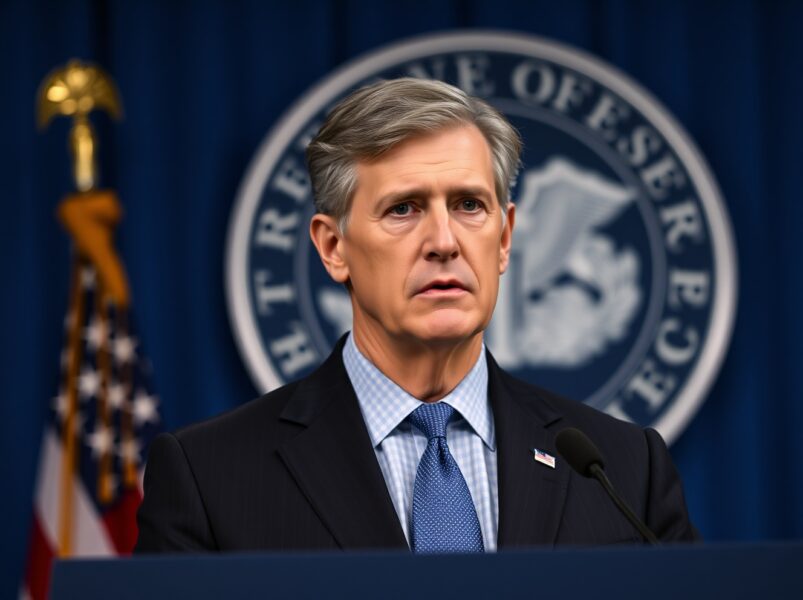
WASHINGTON, D.C. – Federal Reserve Chairman Jerome Powell delivered a significant monetary policy update today, revealing that Federal Reserve officials explicitly discussed the possibility of a rate hike at their latest meeting, marking a pivotal moment in the central bank’s ongoing battle against economic uncertainty.
Federal Reserve Rate Hike Discussion Emerges
During his quarterly press conference, Chairman Powell acknowledged that Federal Reserve participants engaged in substantive discussions about potential interest rate increases. However, he immediately clarified that most committee members do not consider this scenario their base case. The Federal Open Market Committee (FOMC) continues to navigate complex economic signals while maintaining its dual mandate of price stability and maximum employment.
Market analysts immediately parsed Powell’s carefully worded statements. They noted his emphasis on “two-way risks” surrounding interest rate policy. This terminology suggests the Federal Reserve recognizes both inflationary pressures and economic growth concerns. Consequently, monetary policy decisions remain data-dependent rather than predetermined.
Monetary Policy Context and Historical Precedents
The Federal Reserve’s current position reflects a delicate balancing act. Historically, central banks have used forward guidance to manage market expectations. Powell’s explicit mention of rate hike possibilities represents a strategic communication shift. This approach aims to maintain policy flexibility while preventing market complacency.
Recent economic indicators show mixed signals. Inflation metrics have shown gradual improvement, yet certain sectors demonstrate persistent price pressures. Labor market data continues to display resilience, with unemployment remaining near historic lows. These factors create the complex backdrop for Federal Reserve deliberations.
Expert Analysis of Powell’s Communication Strategy
Monetary policy experts emphasize the importance of Powell’s nuanced language. By mentioning rate hike discussions without endorsing them, he maintains optionality. This strategy allows the Federal Reserve to respond to evolving economic conditions without committing to a predetermined path.
Former Federal Reserve economists note that such communication serves multiple purposes. First, it prepares markets for potential policy shifts. Second, it reinforces the data-dependent nature of current decision-making. Finally, it maintains the Federal Reserve’s credibility as an institution responsive to changing economic realities.
Economic Implications and Market Reactions
Financial markets responded with measured volatility following Powell’s remarks. Treasury yields showed modest increases, particularly in shorter-dated securities. Equity markets exhibited sector-specific movements, with rate-sensitive stocks experiencing greater pressure. The dollar index strengthened slightly against major currencies.
These market movements reflect several key considerations:
Policy Uncertainty: Investors now price in a wider range of potential outcomes
Risk Assessment: Market participants reevaluate interest rate exposure
Timeline Adjustments: Expectations for policy changes may shift forward
Sector Rotation: Capital flows toward less rate-sensitive investments
Global Central Banking Coordination
The Federal Reserve’s communication occurs within a global monetary policy context. Other major central banks, including the European Central Bank and Bank of Japan, face similar policy dilemmas. International coordination remains crucial, as divergent monetary policies can create currency volatility and capital flow disruptions.
Emerging market economies particularly monitor Federal Reserve decisions. Their central banks often adjust policies in response to U.S. monetary developments. Powell’s statements therefore carry implications beyond American borders, affecting global financial stability and economic growth prospects.
Inflation Targeting Framework Evolution
The Federal Reserve’s current approach reflects lessons from recent economic cycles. After experiencing unexpectedly persistent inflation, central bankers now emphasize policy flexibility. The traditional 2% inflation target remains, but the path toward achieving it has become more nuanced.
Powell’s press conference comments suggest the Federal Reserve may tolerate temporary inflation deviations. However, his rate hike discussion indicates willingness to respond aggressively if price pressures reaccelerate. This balanced approach aims to avoid both premature tightening and delayed responses.
Forward Guidance and Market Expectations
Federal Reserve communications serve as powerful policy tools. Powell’s specific mention of rate hike possibilities represents deliberate forward guidance. Market participants now incorporate this information into their economic forecasts and investment decisions.
The table below illustrates how Federal Reserve communication affects market pricing:
Policy Signal
Market Impact
Typical Response
Explicit rate hike discussion
Increased volatility
Yield curve steepening
Emphasis on data dependence
Economic sensitivity
Sector rotation
Two-way risk acknowledgment
Option pricing adjustment
Hedging activity increase
Conclusion
Federal Reserve Chairman Jerome Powell’s revelation about rate hike discussions marks a significant development in monetary policy communication. While not the base case scenario, the explicit mention of potential interest rate increases signals the Federal Reserve’s commitment to maintaining all policy options. This approach reflects the complex economic landscape facing central bankers in 2025, where data dependence and policy flexibility remain paramount for achieving sustainable economic stability.
FAQs
Q1: What did Jerome Powell say about rate hikes?Federal Reserve Chair Jerome Powell stated that participants discussed potential rate increases at their latest meeting, though most don’t consider this their base case scenario.
Q2: Why would the Federal Reserve consider raising rates?The Federal Reserve might consider rate hikes if inflationary pressures reaccelerate or if economic growth exceeds sustainable levels, threatening price stability.
Q3: How do markets typically react to such announcements?Markets generally show increased volatility, with Treasury yields rising, the dollar strengthening, and rate-sensitive stocks experiencing pressure as investors adjust expectations.
Q4: What are “two-way risks” in monetary policy?Two-way risks refer to the balanced concerns about both inflationary pressures and economic slowdown, requiring central banks to maintain policy flexibility in both directions.
Q5: How often does the Federal Reserve meet to discuss interest rates?The Federal Open Market Committee meets eight times annually, with additional emergency meetings as needed to address unexpected economic developments.
This post Federal Reserve Rate Hike: Powell’s Critical Warning on Future Monetary Policy first appeared on BitcoinWorld.
